Remembrance
Richard Whelan, 1946-2007
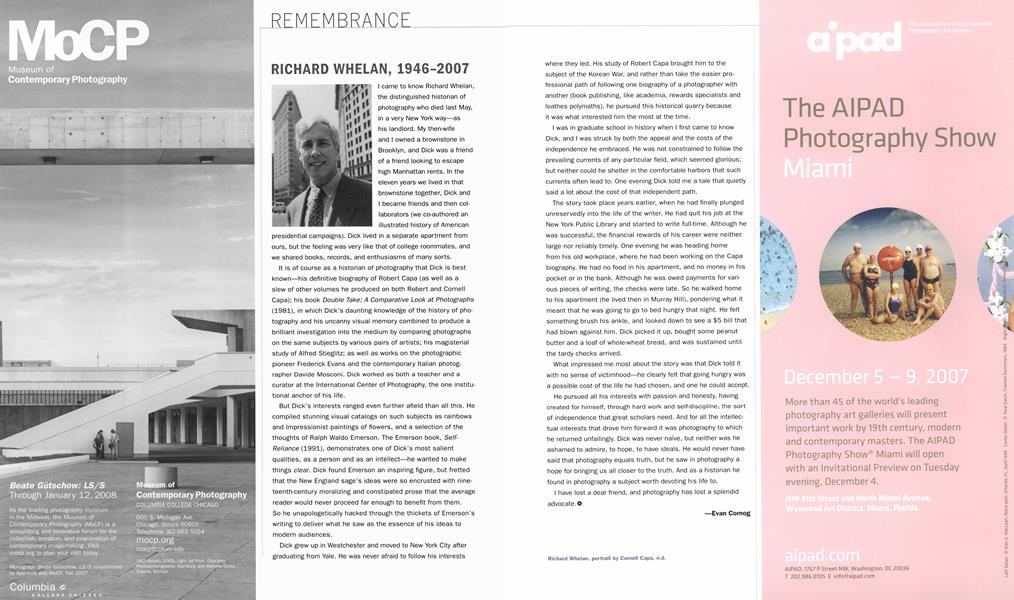
RICHARD WHELAN, 1946-2007
REMEMBRANCE
I came to know Richard Whelan, the distinguished historian of photography who died last May, in a very New York way-as his landlord. My then-wife and I owned a brownstone in Brooklyn, and Dick was a friend of a friend looking to escape high Manhattan rents. In the eleven years we lived in that brownstone together, Dick and I became friends and then col laborators (we co-authored an illustrated history of American presidential campaigns). Dick lived in a separate apartment from ours, but the feeling was very like that of college roommates, and we shared books, records, and enthusiasms of many sorts.
It is of course as a historian of photography that Dick is best known—his definitive biography of Robert Capa (as well as a slew of other volumes he produced on both Robert and Cornell Capa); his book Double Take: A Comparative Look at Photographs (1981), in which Dick’s daunting knowledge of the history of photography and his uncanny visual memory combined to produce a brilliant investigation into the medium by comparing photographs on the same subjects by various pairs of artists; his magisterial study of Alfred Stieglitz; as well as works on the photographic pioneer Frederick Evans and the contemporary Italian photographer Davide Mosconi. Dick worked as both a teacher and a curator at the International Center of Photography, the one institutional anchor of his life.
But Dick’s interests ranged even further afield than all this. Fie compiled stunning visual catalogs on such subjects as rainbows and Impressionist paintings of flowers, and a selection of the thoughts of Ralph Waldo Emerson. The Emerson book, SelfReliance (1991), demonstrates one of Dick’s most salient qualities, as a person and as an intellect—he wanted to make things clear. Dick found Emerson an inspiring figure, but fretted that the New England sage’s ideas were so encrusted with nineteenth-century moralizing and constipated prose that the average reader would never proceed far enough to benefit from them.
So he unapologetically hacked through the thickets of Emerson’s writing to deliver what he saw as the essence of his ideas to modern audiences.
Dick grew up in Westchester and moved to New York City after graduating from Yale. He was never afraid to follow his interests where they led. His study of Robert Capa brought him to the subject of the Korean War, and rather than take the easier professional path of following one biography of a photographer with another (book publishing, like academia, rewards specialists and loathes polymaths), he pursued this historical quarry because it was what interested him the most at the time.
I was in graduate school in history when I first came to know Dick, and I was struck by both the appeal and the costs of the independence he embraced. He was not constrained to follow the prevailing currents of any particular field, which seemed glorious; but neither could he shelter in the comfortable harbors that such currents often lead to. One evening Dick told me a tale that quietly said a lot about the cost of that independent path.
The story took place years earlier, when he had finally plunged unreservedly into the life of the writer. He had quit his job at the New York Public Library and started to write full-time. Although he was successful, the financial rewards of his career were neither large nor reliably timely. One evening he was heading home from his old workplace, where he had been working on the Capa biography. He had no food in his apartment, and no money in his pocket or in the bank. Although he was owed payments for various pieces of writing, the checks were late. So he walked home to his apartment (he lived then in Murray Hill), pondering what it meant that he was going to go to bed hungry that night. He felt something brush his ankle, and looked down to see a $5 bill that had blown against him. Dick picked it up, bought some peanut butter and a loaf of whole-wheat bread, and was sustained until the tardy checks arrived.
What impressed me most about the story was that Dick told it with no sense of victimhood—he clearly felt that going hungry was a possible cost of the life he had chosen, and one he could accept.
He pursued all his interests with passion and honesty, having created for himself, through hard work and self-discipline, the sort of independence that great scholars need. And for all the intellectual interests that drove him forward it was photography to which he returned unfailingly. Dick was never naïve, but neither was he ashamed to admire, to hope, to have ideals. He would never have said that photography equals truth, but he saw in photography a hope for bringing us all closer to the truth. And as a historian he found in photography a subject worth devoting his life to.
I have lost a dear friend, and photography has lost a splendid advocate.©
Evan Cornog
More From This Issue
-
 Work In Progress
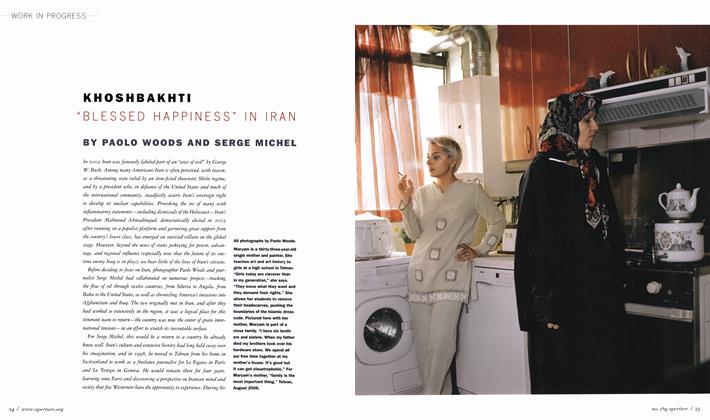
Khoshbakhti "Blessed Happiness" In Iran
Winter 2007 -
 Mixing The Media
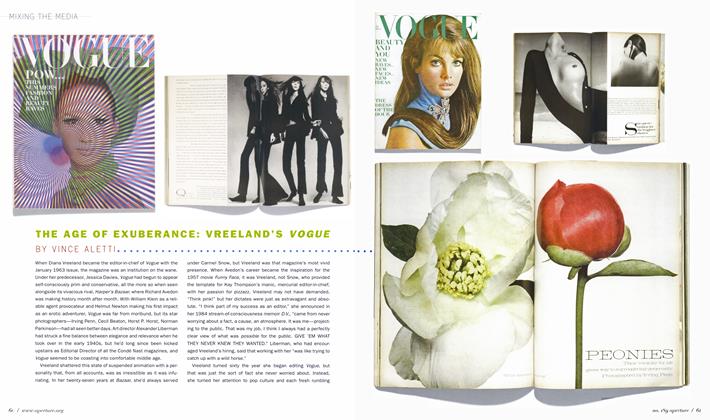
The Age Of Exuberance: Vreeland's Vogue
Winter 2007 -
 Essay
EssayModernist Photography In Central Europe
Winter 2007 -
 On Location
Dawoud Bey's Harlem
Winter 2007 -
 Archive
Back In The Gdr
Winter 2007 -
 Photographer's Project
Martin Parr’s Parking Spaces
Winter 2007
Evan Cornog
Remembrance
-
 Remembrance
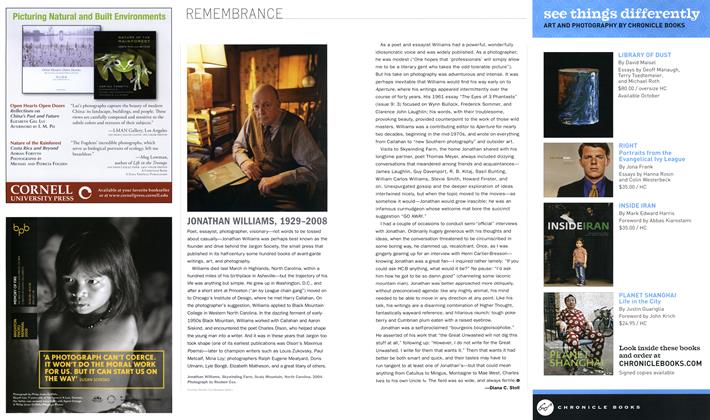
Jonathan Williams, 1929-2008
Fall 2008 -
 Remembrance
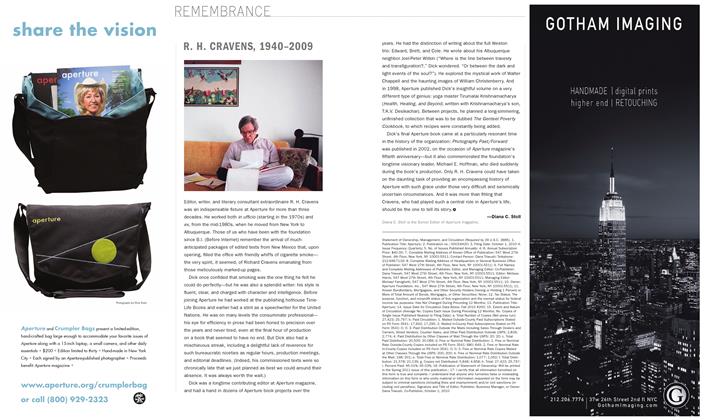
R. H. Cravens, 1940-2009
Spring 2011 -
 Remembrance
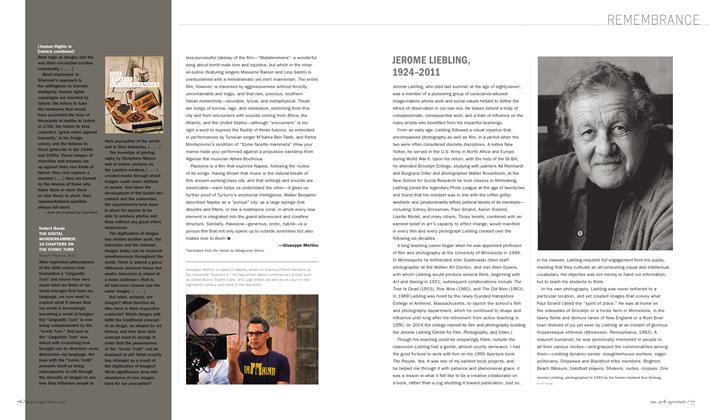
Jerome Liebling, 1924-2011
Spring 2012 -
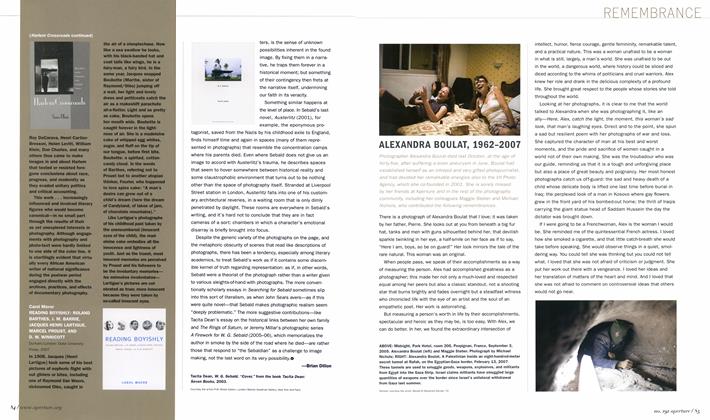 Remembrance
Alexandra Boulat, 1962-2007
Summer 2008 -
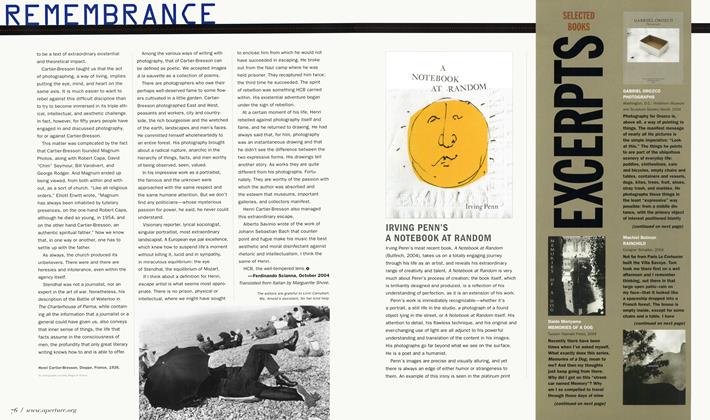 Remembrance
Irving Penn's A Notebook At Random
Summer 2005 -
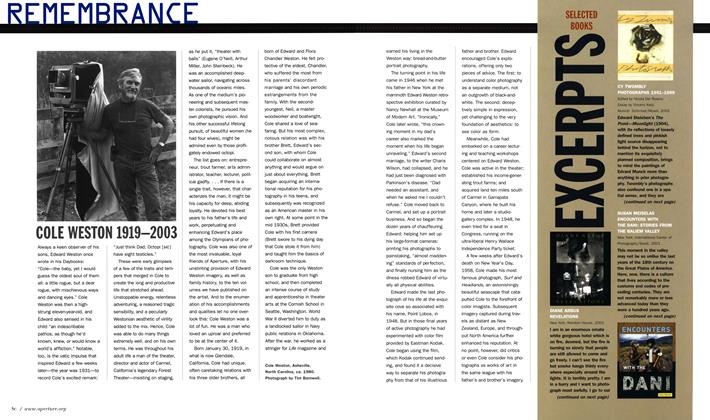 Remembrance
Cole Weston 1919-2003
Spring 2004

