What Matters Now?
Rediscovering Hine
Rediscovering Hine
What Matters Now?
Photography, Technology, and the World
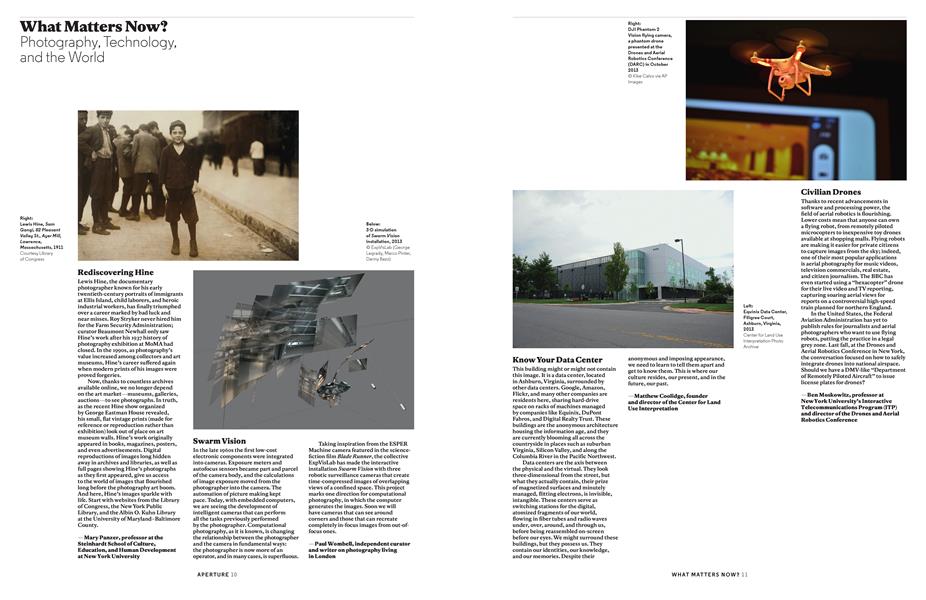
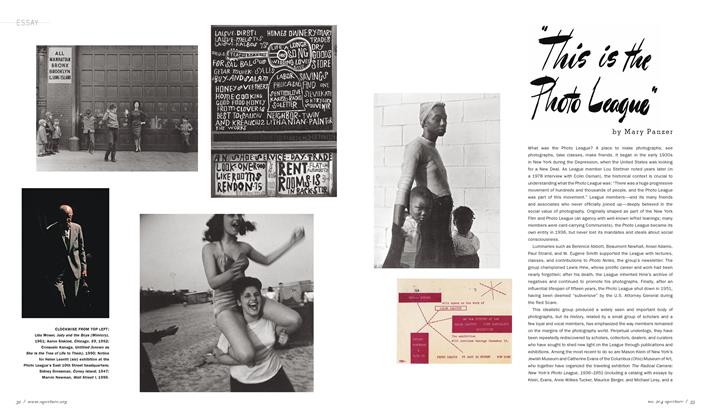
Lewis Hine, the documentary photographer known for his early twentieth-century portraits of immigrants at Ellis Island, child laborers, and heroic industrial workers, has finally triumphed over a career marked by bad luck and near misses. Roy Stryker never hired him for the Farm Security Administration; curator Beaumont Newhall only saw Hine’s work after his 1937 history of photography exhibition at MoMA had closed. In the 1990s, as photography's value increased among collectors and art museums, Hine’s career suffered again when modern prints of his images were proved forgeries.
Now, thanks to countless archives available online, we no longer depend on the art market—museums, galleries, auctions—to see photographs. In truth, as the recent Hine show organized by George Eastman House revealed, his small, flat vintage prints (made for reference or reproduction rather than exhibition) look out of place on art museum walls. Hine’s work originally appeared in books, magazines, posters, and even advertisements. Digital reproductions of images long hidden away in archives and libraries, as well as full pages showing Hine’s photographs as they first appeared, give us access to the world of images that flourished long before the photography art boom. And here, Hine’s images sparkle with life. Start with websites from the Library of Congress, the New York Public Library, and the Albin O. Kuhn Library at the University of Maryland-Baltimore County.
— Mary Panzer, professor at the Steinhardt School of Culture, Education, and Human Development at New York University
Mary Panzer
What Matters Now?
-
 What Matters Now?
Photography, Technology, And The World
Summer 2013 -
 What Matters Now?
Civilian Drones
Spring 2014 -
 What Matters Now?
A Century Of Play
Fall 2013 -
 What Matters Now?
Time, Space, And 16mm
Fall 2014 -
 What Matters Now?
Pocket Photos
Winter 2013 -
 What Matters Now?
Veil Of Clarity
Summer 2014
